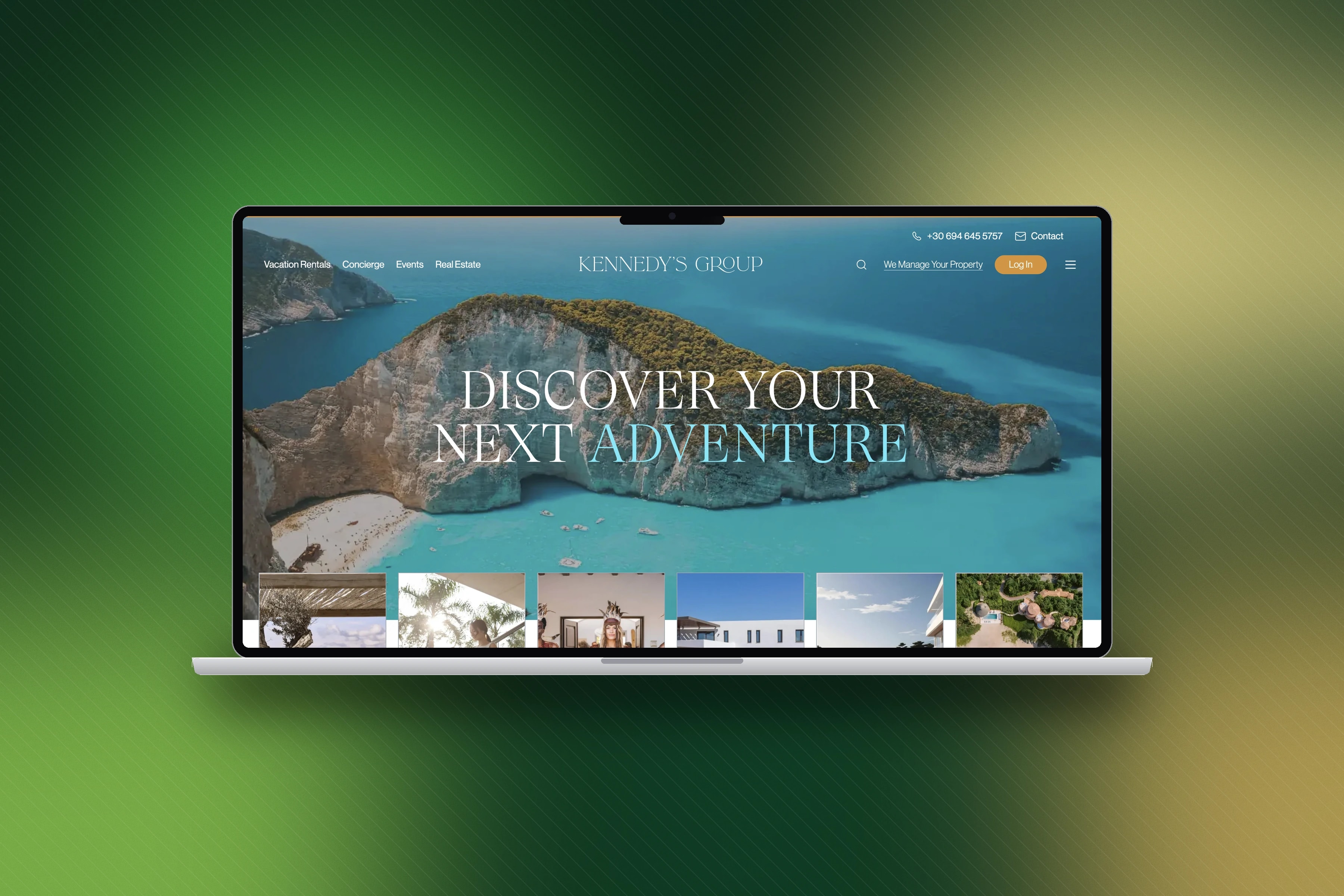
Luxury villa rental looks like a variation of vacation rental, but the business works differently. Guests expect a concierge, not a checkout. Owners expect reporting, not a payout email. And the team behind it manages villas, events, experiences and bookings that a generic booking engine was never designed for.
This guide covers what such a platform needs, based on our work as the ongoing full-stack team for Kennedy's Group, an ultra-luxury villa rental and concierge business.
Three products, one source of truth
A luxury rental platform is really three products that must stay consistent with each other:
- The public website, where guests search properties and send inquiries.
- The guest experience, such as a shared itinerary with bookings for the stay.
- The internal backoffice, where the team manages properties, products, bookings and owners.
The most important architecture decision is that all three read from the same API and database. When a villa's data changes in the backoffice, the public site and the itinerary have to show it immediately. In Kennedy's Group, a Node.js and PostgreSQL API sits under the public Next.js site and the Loggia admin panel, built on shared components.
The public site: search that actually works
High-end guests have little patience. Search and listing pages need to be fast, accurate and rich:
- Filters that match the data. It sounds obvious, but filters often drift away from what is in the database. One of the issues we fixed was a location filter that was silently dropping results. Every lost result is a lost inquiry.
- Map and search together. A sticky search bar and map on the listings page lets guests explore by area without losing their filters.
- Currency and unit toggles. International clients think in their own currency and in square meters or square feet. Letting them switch removes friction at the moment of decision.
- Rich property pages. Photos, amenities, location and services, with a clear path to inquiry.
Inquiries that reach the right person
In this business, most sales start with a conversation, not an instant booking. An inquiry about a villa, an event or a concierge service should reach the person who handles it. We built an email routing engine that sends each type of inquiry to the right inbox, so nothing waits in a generic mailbox.
Automatic location data
Properties need consistent country, region and area data for search and filters to work. Instead of relying on manual entry, the backend runs reverse geocoding on the server, so every property resolves its location automatically from its coordinates.
The guest experience: shared itineraries
A luxury stay is more than a villa: transfers, chefs, boats, events, experiences. A shared itinerary gives guests and the team one view of the whole stay, with an inline booking flow for adding services without leaving it.
The backoffice: where the business actually runs
The internal panel is usually the biggest and most underestimated part. Loggia, the backoffice we built for Kennedy's Group, covers:
- Fourteen product categories, from villas to events and concierge services.
- Booking management.
- Shared itineraries with booking.
- An owner report generator with PDF export, so villa owners get a polished performance summary.
Owner reports deserve a special mention. In luxury rental, owners are clients too, and a clear, well-designed report is part of how the business keeps its inventory.
Continuous development, not a one-off project
Platforms like this are never finished. The business adds services, markets and categories, and the software has to follow. Working as an ongoing team means shipping small, tested improvements continuously, fixing real data issues alongside new features, and keeping the public site and the admin panel in sync.
Build or buy?
Generic vacation rental software handles calendars and payments well, but it struggles with concierge products, owner reporting and the level of presentation luxury clients expect. If those are central to your business, a custom platform is usually the better long-term investment.
If you run a rental, hospitality or concierge business and your software is holding you back, let's talk.
Frequently asked questions
What features does a villa rental platform need?
At minimum: property search with reliable filters and a map, rich property pages, an inquiry or booking flow, and an admin panel to manage properties and bookings. Luxury businesses usually add itineraries, concierge services and owner reports.
Should a luxury rental site use instant booking?
Often not. High-end stays usually involve a conversation about dates, services and preferences, so a well-routed inquiry flow converts better than a generic checkout.
Can a custom platform integrate with existing booking channels?
Yes. Custom platforms can sync availability and bookings with external channels through their APIs, while keeping the core operation in your own system.