Most people who want an app start in the same place: a clear problem, a rough idea of the solution and no idea who to talk to. That is fine. You don't need to know anything technical to start. You need to know what to bring to the first conversation and what to ask.
1. Write the problem, not the features
Before thinking about screens, write in three or four sentences who has the problem, what they do today to solve it and why that is not good enough. For example: "Hikers in Tierra del Fuego lose signal on the trail and get lost. Today they use paper maps or screenshots. Nothing works offline with real trail data."
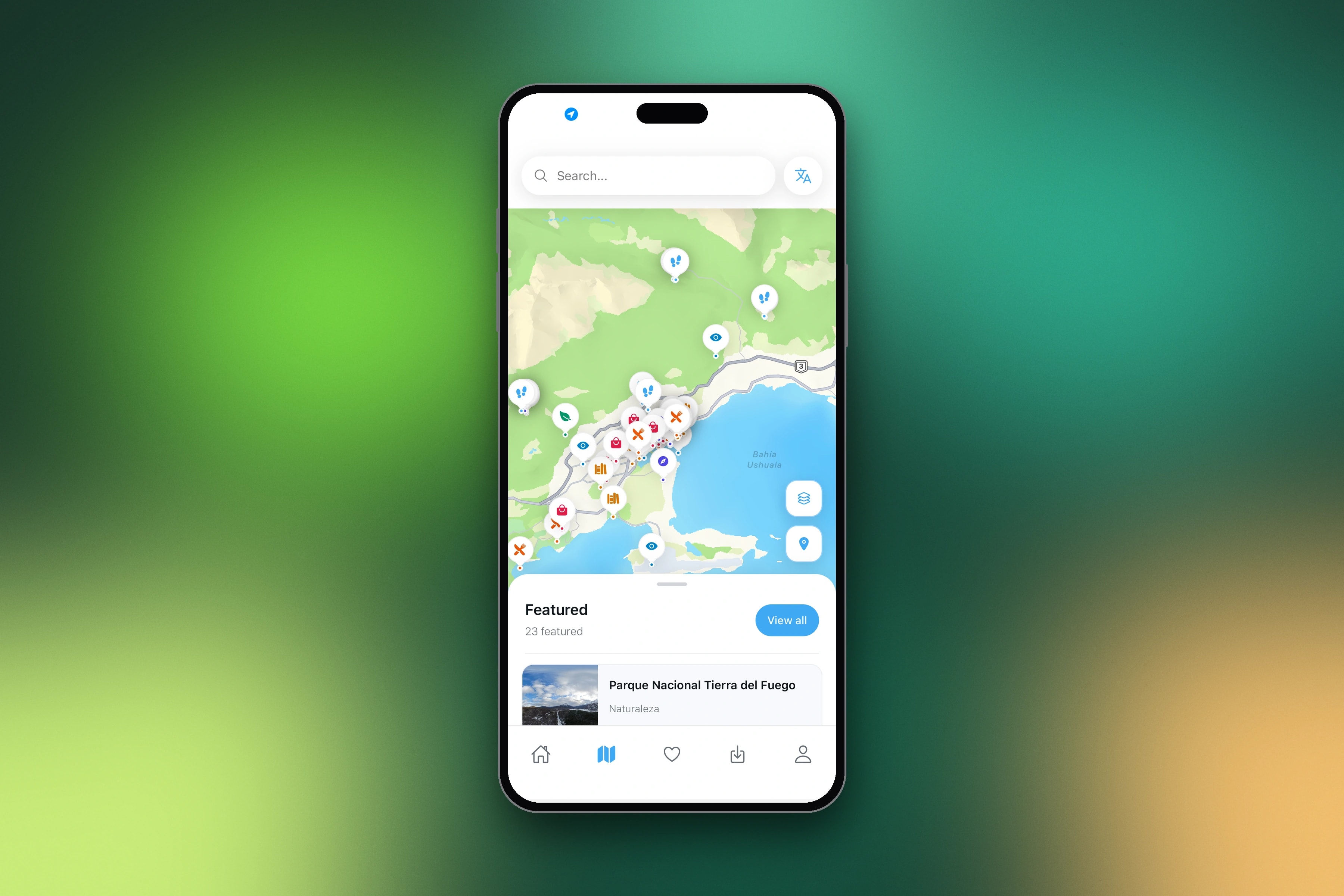
That paragraph is worth more than a list of 40 features. It is what lets a team suggest the smallest version that solves it. It is also exactly how Ushuaia360 started: an offline hiking app, because the problem was the signal, not the map.
2. Decide who uses it and on what device
- Your clients, on their phone: an iOS and Android app.
- Your team, at a desk: probably a web platform, not an app.
- Both: a web backoffice for your team and an app for your clients, sharing the same data.
If you are unsure whether you need a native app, a cross-platform one or a web app, this comparison covers the trade-offs.
3. Pick the first version, not the final one
The first version should do one thing well for one type of user. Payments, chats, ratings and dashboards can come later, once real people use it. That first version is an MVP, and it is the fastest and cheapest way to find out if the idea works. If you want to test the idea before building anything, these are the ways to validate it.
4. Have a budget range in mind
You don't need an exact number, but a range helps the team propose something realistic. What drives the cost of an app is the number of user roles, integrations (payments, maps, external systems) and whether it needs to work offline. We broke it down in how much it costs to build an app.
5. Choose who builds it
This is the question most people actually have: who do I talk to? There are three options:
| Freelancer | In-house team | Studio or agency | |
|---|---|---|---|
| Best for | A small, well-defined piece | A product that is the core of the company, long term | A full product, from idea to launch |
| Design, development and strategy | Usually one of the three | You hire each role | All three in one team |
| Speed to start | Fast | Slow (hiring) | Fast |
| Risk | Depends on one person | Hiring and management | Depends on the studio you pick |
We compare them in detail in freelancer, in-house or agency, and how to choose a development agency lists the questions to ask before signing.
6. What to bring to the first call
- The problem paragraph from step 1.
- Who uses it and on what device.
- Two or three apps you like, and what you like about them.
- A budget range and a target date, if you have them.
- Anything that already exists: a spreadsheet, a website, a process on paper.
With that, a good team should be able to tell you in one conversation whether the project makes sense, what the first version would include and roughly what it costs.
What happens next
At Nuba Studio, after that first call we send a proposal with the scope and a closed price for the first version. Then come discovery, design, development and launch, with something working you can try every one or two weeks. The full process is in from idea to launch.
If you have an idea for an app and want to know if it makes sense, tell us about it. We will be honest if the answer is not to build it yet.
Frequently asked questions
Do I need to know how to code to build an app?
No. You need to know the problem, who has it and what you want them to be able to do. Turning that into screens and code is the job of the team you hire.
Who should I talk to if I want to build an app?
A studio or agency that does design and development is usually the simplest option if you want a complete app from idea to launch. A freelancer works for small, well-defined pieces, and an in-house team makes sense when the app is the core of your company long term.
How long does it take to build an app?
A focused first version usually takes between two and four months from the first conversation to the app stores, depending on the number of features and integrations.
Does my app need to be on iOS and Android?
If your clients use it on their phone, almost always yes. Cross-platform frameworks like React Native let you launch on both with a single codebase, which lowers the cost compared to two separate native apps.